Admin
Admin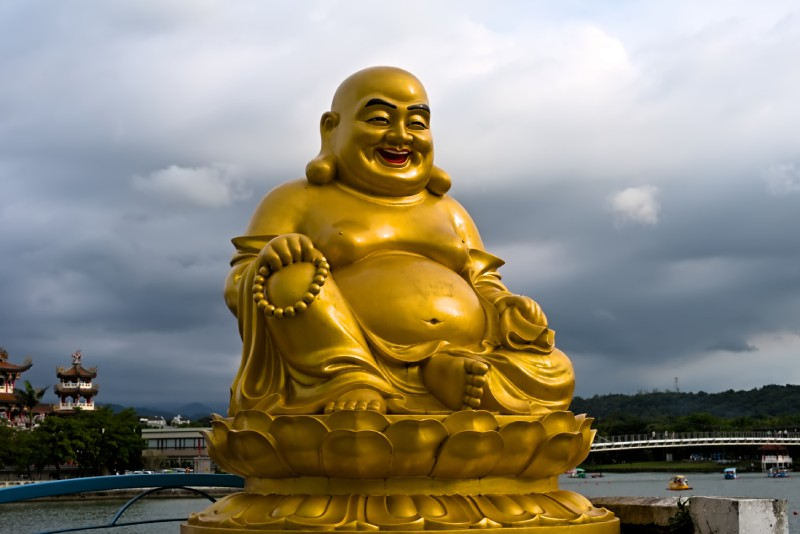
If you have ever walked into an Asian restaurant, a feng shui shop, or a wellness boutique, you have almost certainly encountered the plump, jovial figure known universally as the Laughing Buddha. Grinning from ear to ear, with an exposed belly and often surrounded by children or clutching a cloth sack, this iconic figure radiates an undeniable sense of joy and abundance.
Yet, despite his ubiquitous presence in global popular culture, a profound gap exists between his mainstream image and his true spiritual lineage. In the West, he is frequently confused with Siddhārtha Gautama, the historical Buddha who founded Buddhism. In reality, the Laughing Buddha represents a completely distinct historical and mythological tradition—one deeply rooted in Chinese folklore, Zen Buddhism, and the ancient philosophies of Taoism. Understanding the deeper narrative of this cheerful mystic reveals a rich tapestry of history, psychological wisdom, and timeless spiritual lessons.
The Historical Origin of Budai
The true identity of the Laughing Buddha belongs to a tenth-century Chinese monk named Budai, or Hotei in Japanese tradition. Living during the Later Liang Dynasty in China, Budai was far from the conventional image of a monastic ascetic. He was eccentric, unkempt, and entirely nomadic, carrying all his meager earthly possessions in a large cloth sack—a detail that gave him his name, as “Budai” literally translates to “cloth bag.”
Historical accounts describe Budai as a man of great warmth and a somewhat erratic, mystical nature. He did not confine his spiritual practice to the walls of a monastery; instead, he wandered through village marketplaces and countryside roads, interacting with ordinary citizens, merchants, and children. Rather than delivering complex theological lectures or demanding adherence to strict rituals, he communicated through laughter, silence, and spontaneous acts of generosity. When he passed through a village, his presence alone was said to transform the atmosphere, turning grief or stress into lighthearted celebration.
Following his death, folklore surrounding Budai grew exponentially. Shortly before passing away, he left behind a death poem that led many Buddhist practitioners to believe he was actually an incarnation of Maitreya, the Bodhisattva of the future who is destined to appear on Earth to achieve complete enlightenment and teach the pure dharma. Through this association, the humble, sack-toting monk was elevated to cosmic status, becoming a beloved figure of devotion and a permanent fixture in Zen and Chan Buddhist art.
The Deeper Metaphor of the Cloth Sack
At first glance, the large bag slung over the Laughing Buddha’s shoulder appears to be nothing more than a practical traveling tool or a visual gag. In feng shui and Chinese folk tradition, the sack is often interpreted as a treasure bag filled with gold coins, jewels, and never-ending food supplies to be distributed to the poor. While this material interpretation makes him a popular symbol for business owners seeking financial prosperity, the spiritual and psychological metaphor runs much deeper.
In Zen philosophy, Budai’s sack represents the heavy burdens of human consciousness—the emotional baggage, existential anxieties, attachments, and rigid judgments that people carry throughout their lives. When people approached Budai to ask about the meaning of Zen, he would respond with a silent, theatrical gesture: he would drop his bag heavily onto the ground. This physical act symbolized the ultimate goal of enlightenment—the willingness to completely let go of our attachments, ego-driven desires, and mental suffering.
Equally important was his second gesture. When asked what a person should do after achieving enlightenment, Budai would pick his heavy bag right back up, sling it over his shoulder, and walk away laughing. This sequence illustrated that true spiritual awakening does not require escaping from the mundane world or abandoning one’s earthly responsibilities. Instead, it means returning to the marketplace of daily life, bearing the inevitable weights of human existence, but carrying them with an inner lightness, detachment, and joyful resilience.
Decoding the Visual Symbolism
Every physical attribute of the Laughing Buddha carries a specific symbolic meaning that speaks to the core values of happiness, health, and spiritual alignment. His most prominent feature is his large, protruding belly. In Western cultures, a prominent stomach is rarely associated with spiritual mastery, but in ancient Chinese culture, the abdomen was viewed as the physical seat of the soul and the primary reservoir of life-force energy, known as Qi. A large stomach symbolized a person of immense internal capacity—someone who possessed vast tolerance, wisdom, and a generous heart capable of digesting the world’s sorrows without losing their inner peace.
His uninhibited, wide-mouthed smile serves as a reminder of the therapeutic power of joy. In many depictions, his eyes are crinkled shut with genuine laughter, suggesting a state of blissful detachment from worldly anxieties. The elongated earlobes found on his statues match the traditional iconography of the historical Buddha, symbolizing profound spiritual wisdom and the ability to listen deeply to the cries of suffering throughout the world.
The various objects held by the Laughing Buddha alter his symbolic function depending on his posture. When depicted holding a gourd, known as a wu lou, he represents longevity and physical health, as these vessels were historically used by traditional doctors to store life-saving medicine. When he holds a ruyi scepter, a curved ceremonial staff, he embodies authority, power, and the effortless fulfillment of one’s wishes. Figures showing him sitting atop a massive pile of gold coins or holding a giant pearl represent material wealth, abundance, and luck in business endeavors.
The Psychology of Joy and the Practice of Zen
Beyond the boundaries of religious iconography and folk superstition, the Laughing Buddha stands as a profound psychological prototype for mental well-being. Modern psychology frequently emphasizes the concept of cognitive flexibility—the ability to adapt to changing circumstances without becoming overwhelmed by stress. The Laughing Buddha is the ultimate personification of this trait. He meets the unpredictability of human life not with rigid resistance, but with a fluid, smiling acceptance.
His focus on children is another critical pillar of his psychological wisdom. In many traditional carvings, multiple small children are shown climbing all over his large frame, pulling his ears and playing with his bag. Budai never pushes them away; instead, he laughs along with their innocence. This dynamic represents the preservation of the inner child. It suggests that spiritual maturity does not turn a person into a cold, detached philosopher, but rather returns them to a state of child-like wonder, curiosity, and immediate presence in the current moment.
By celebrating laughter as a spiritual tool, the tradition of Budai challenges the misconception that spirituality must always be serious, grim, and painfully disciplined. He demonstrates that a sense of humor is an essential component of wisdom. Laughter breaks down the rigid walls of the ego, instantly dissolves tension, and allows individuals to step outside of their self-inflicted dramas to see the world from a place of vast, compassionate perspective.
Modern Placement and Contemporary Relevance
In contemporary life, the Laughing Buddha has successfully transitioned from ancient temples into modern interior design and mindfulness practices. Within the framework of feng shui, the placement of a Budai statue is believed to consciously direct the flow of energy within a home or office space. Placing a statue directly facing the main entrance is thought to neutralize any negative or chaotic energy entering the home, transforming it into welcoming warmth.
For office spaces and business environments, a Laughing Buddha placed on a desk can serve as a visual anchor to reduce workplace anxiety. Looking at his serene, smiling face acts as a gentle psychological interrupt when one is caught in the grip of stress, reminding the observer to breathe, drop their shoulders, and maintain perspective amid deadlines and financial pressures. The tradition of rubbing the Buddha’s belly for good luck has persisted across cultures, serving as a playful, physical interaction that connects individuals directly to the concepts of joy and abundance.
Conclusion
The Laughing Buddha is far more than a decorative trinket or a simplified symbol of material wealth. He is a historical legacy wrapped in layers of deep philosophical truth. As the incarnation of the monk Budai, he reminds humanity that spiritual enlightenment is not found by withdrawing from society or intellectualizing complex dogmas, but by walking through the everyday world with a kind heart, a light spirit, and an open mind. By teaching people to drop their mental sacks of worry and embrace the simple joy of existence, this ancient mystic continues to smile across the centuries, offering a beautiful, laughing blueprint for a peaceful life.