Admin
Admin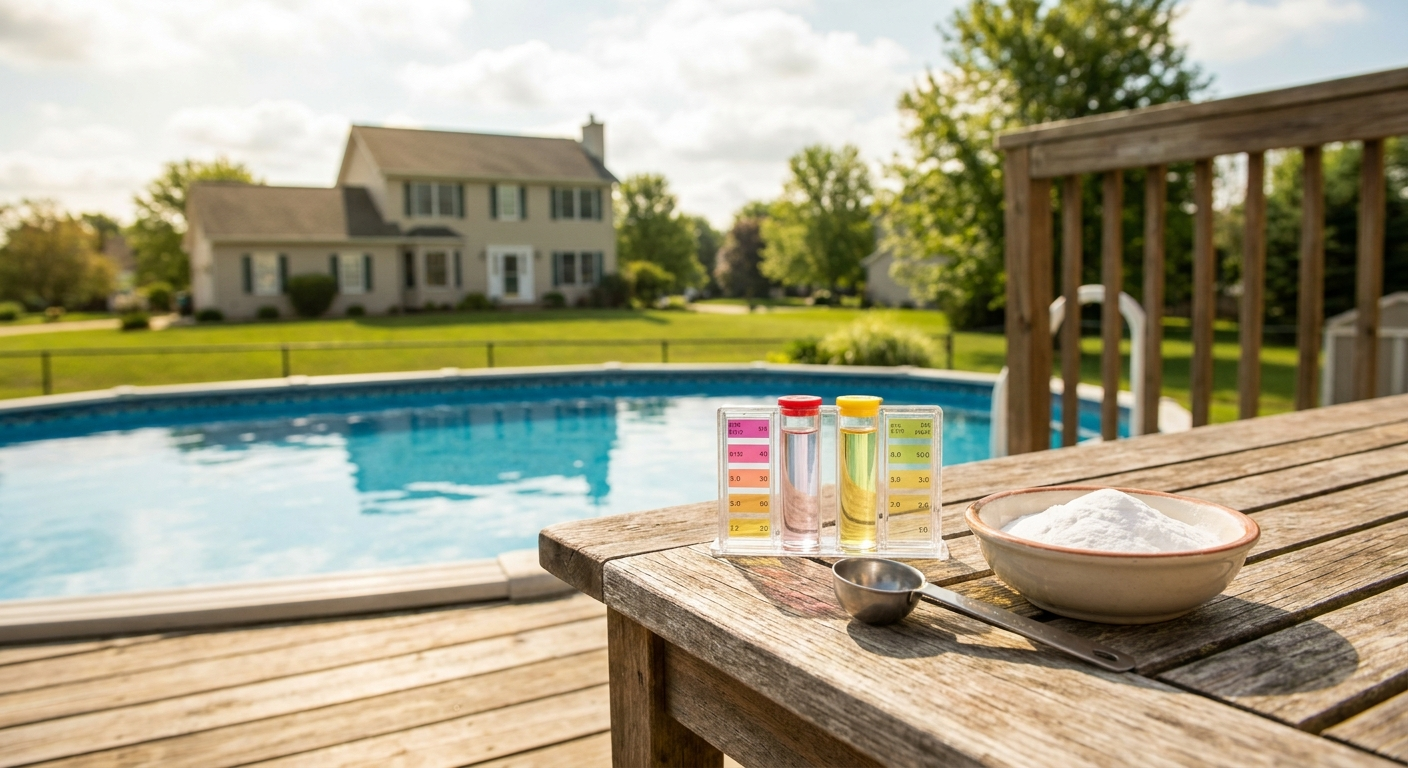
A simple weekend water check can help prevent cloudy water, pH swings, and last-minute pool problems.
A backyard pool should feel easy to enjoy. It should not become a stressful project right before guests arrive.
Still, many pool owners see the same issues return each week. The water turns dull. The pH drifts. Chlorine seems less effective. Sometimes the pool looks fine one day and cloudy the next.
Most of these problems come from water balance, not from one single mistake. A simple weekend checklist can help you catch small changes before they become bigger problems.
This guide explains how to test smarter, adjust slowly, and keep pool water clearer through heat, rain, and heavy use.
Why Pool Water Gets Out of Balance
Pool water changes every day. Sunlight lowers sanitizer. Heat speeds up chemical demand. Rain can dilute the water and carry debris into the pool.
Swimmers also change the water. Sunscreen, sweat, body oils, and dirt all add load to the system. The more people use the pool, the harder the sanitizer and filter have to work.
That is why a pool may look clear on Thursday but dull by Saturday. The change feels sudden, but the cause usually builds through the week.
The Three Readings to Check First
You do not need to test every number before each swim. For normal home care, start with pH, total alkalinity, and sanitizer level.
pH shows how acidic or basic the water is. Poor pH can cause eye irritation, scale, cloudy water, and corrosion.
Total alkalinity helps the water resist pH swings. When alkalinity is too low, pH can become difficult to control.
Sanitizer level shows whether the water can handle contaminants from swimmers, heat, and debris.
These readings work together. When one is far outside the normal range, the others often become harder to manage.
Where Baking Soda Fits Into the Routine
Baking soda is often used when total alkalinity is too low. It can help the water resist sudden pH changes and make the pool easier to manage.
It is not a sanitizer. It will not kill algae, remove debris, or fix a dirty filter. Its main role is to support alkalinity and improve pH stability.
For homeowners who want a clearer dosing process, the complete baking soda pool guide explains how baking soda fits into regular water balance.
Friday-to-Sunday Pool Care Plan
Use this simple plan before a busy swim weekend. It works well during hot weather, after rain, or when you expect more people in the pool.
Friday evening
- Test pH, total alkalinity, and sanitizer.
- Skim leaves and floating debris.
- Empty the skimmer basket and pump basket.
- Brush steps, corners, and shaded areas.
- Run the pump long enough to circulate the water.
Saturday morning
- Check water clarity before swimming.
- Retest if you adjusted chemicals the night before.
- Confirm that water flow looks normal.
- Avoid adding more chemicals unless test results support it.
Sunday evening
- Skim and brush after heavy use.
- Check sanitizer after swimmers leave.
- Clean baskets and inspect the filter.
- Write down repeated issues, such as cloudy water or falling pH.
This routine is short, but it creates a useful pattern. It also helps you avoid rushed chemical changes.
Quick Reference for Common Pool Problems
Use these quick checks when the water does not look or feel right.
- Cloudy water: Check filtration, sanitizer, pH, and total alkalinity before adding more treatment.
- Strong chlorine smell: Test sanitizer and pH. The smell may come from used-up sanitizer compounds, not from too much clean sanitizer.
- pH keeps dropping: Test total alkalinity. Low alkalinity is one common reason pH becomes unstable.
- pH keeps rising: Check alkalinity, refill water, aeration, and recent chemical use.
- Algae returns quickly: Review sanitizer level, brushing habits, shaded areas, and pump run time.
A quick reference section helps readers act faster. It also keeps the article easier to scan.
Common Mistakes That Make Pool Balance Harder
Many pool problems get worse because the first fix is rushed. Slow and measured care is usually safer.
- Adding chemicals without testing first.
- Using baking soda for every cloudy water issue.
- Retesting too soon after an adjustment.
- Adding large amounts in one spot.
- Ignoring the filter when water looks cloudy.
- Treating repeated problems as one-time events.
The goal is not to add more. The goal is to add the right amount at the right time.
How to Adjust Without Overcorrecting
Pool water responds best to small changes. If a reading is low, add part of the estimated amount first.
Let the pump run for several hours. Then test again before adding more.
This matters most when adjusting pH or alkalinity. A large correction can push the water too far in the opposite direction.
A simple log can also help. Write down the test result, what you added, and the next reading. After a few weeks, you will understand how your pool usually responds.
When the Same Problem Keeps Returning
A repeated issue usually has a pattern behind it. The pump may not run long enough. The filter may need cleaning. The pool may get more sun or heavier swimmer use than expected.
Refilling water can also affect balance. Some water sources are naturally high or low in certain levels. Heavy rain can change readings quickly, too.
If the same problem returns every week, do not repeat the same fix without checking the cause. Review weather, water source, circulation, cleaning habits, and swimmer load.
Frequently Asked Questions
Can baking soda clear a cloudy pool?
Baking soda may help if cloudiness is related to low alkalinity and unstable pH. It will not solve cloudiness caused by algae, dirty filters, or low sanitizer by itself.
Should I test before adding baking soda?
Yes. Always test first. Baking soda should only be added when alkalinity is low or when test results show that it is needed.
How long should the pump run after an adjustment?
Let the water circulate for several hours before retesting. Some pool owners prefer to test again the next day for a more stable reading.
Why does pH keep changing?
Low alkalinity is one possible cause. Rain, refill water, heavy swimming, chemical use, and poor circulation can also affect pH.
Final Thoughts
Good pool care is built on routine, not guesswork. Clear water depends on stable chemistry, strong circulation, brushing, filtration, and regular testing.
Baking soda can be useful when alkalinity is low, but it should be part of a wider maintenance plan. Test first, adjust slowly, and give the water time to circulate.
A simple weekend checklist can prevent last-minute problems. That means less time fixing the pool and more time enjoying it.